







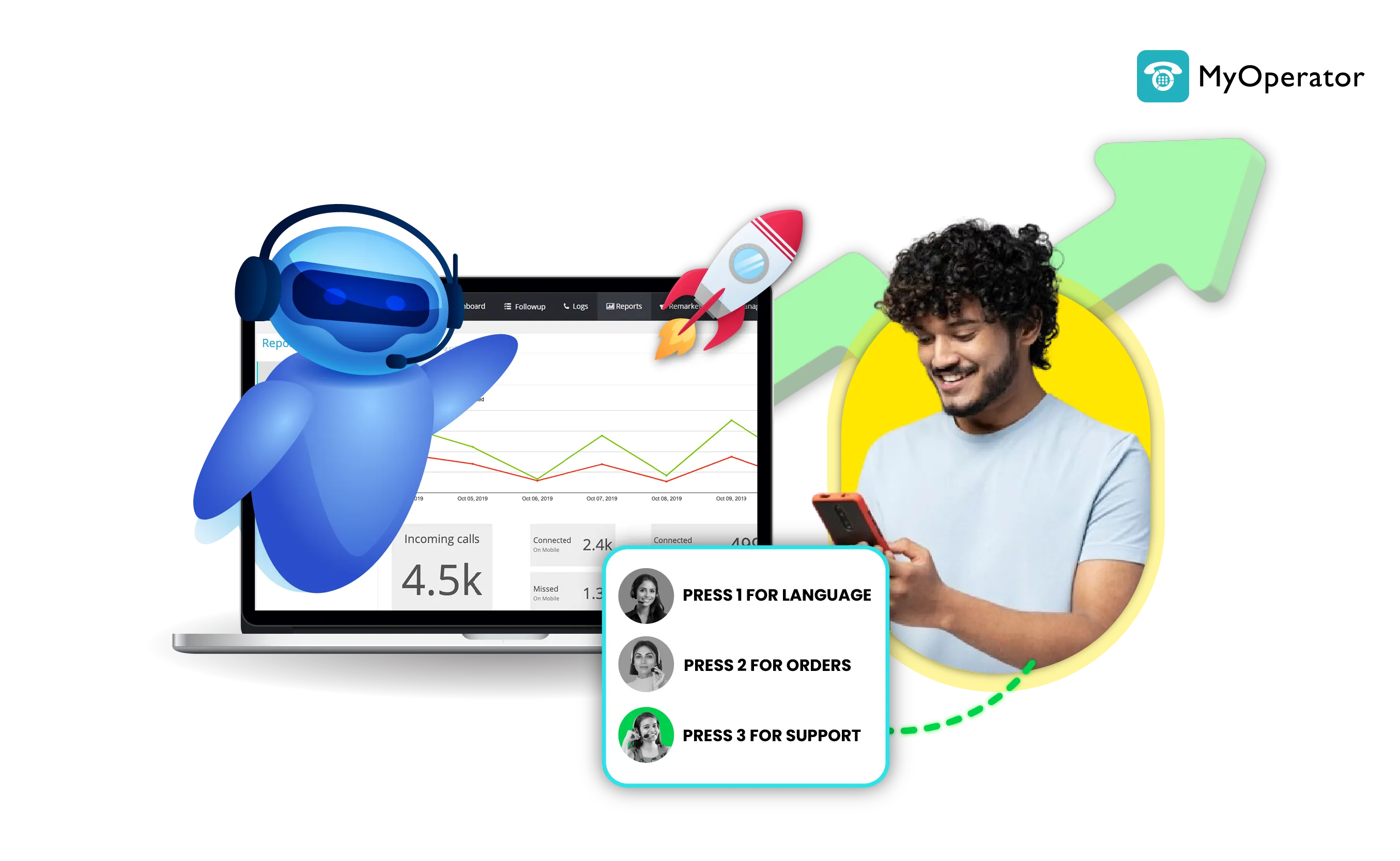


Handling customer data remained a challenge until the advent of the sales automation process. This technology enables data synchronisation, reduces manual tasks, ensures universal data access, and incorporates analytics. And the best part - these benefits are just the tip of the iceberg.To build a more efficient sales function, consider leveraging technology. Sales automation not only streamlines processes but also boosts morale and productivity. If you're curious about call automation in sales and the benefits of using automated calls, you are at the right place.Learn how automated sales calls can enhance your team's performance, what sales automation is and explore the benefits of using sales automation software for your business. Let’s begin!
What Is Call Automation?
Call automation refers to the use of technology to automate and streamline various aspects of the calling process. It involves the deployment of software and systems that can perform tasks such as making calls, leaving pre-recorded messages, and gathering information without direct human intervention. Essentially, it is a method of leveraging technology to handle routine and repetitive tasks associated with telephony communication.
Where Is Call Automation Software Used?
The applications of call automation software are diverse and extend across various industries. Call center solution providers, for instance, utilise this technology to manage large volumes of outbound and inbound calls efficiently.Sales and marketing teams integrate call automation into their strategies to reach a broader audience, nurture leads, and enhance customer interactions. Additionally, service-oriented businesses leverage call automation for appointment reminders, surveys, and customer feedback collection.
Automated Phone Calls For Businesses
In the world of business, automated phone calls have emerged as a strategic approach to enhance communication processes. These calls can be initiated for a myriad of purposes, ranging from marketing campaigns to customer care service initiatives.Automated phone calls enable businesses to reach a large audience swiftly, disseminating information, promotions, or updates without the need for extensive manual effort.However, the key lies in the targeted and thoughtful implementation of automated phone calls.Businesses need to consider the relevance and timing of their calls, ensuring that the communication aligns with the recipient's preferences and expectations.Moreover, integrating personalised elements into automated calls can significantly boost engagement and effectiveness.

Benefits of Using Automated Calls
The adoption of call automation brings forth various benefits for businesses seeking to enhance their sales processes.
1. Increased Efficiency and Productivity
Automated calls eliminate the need for manual dialling, freeing up valuable time for sales representatives to focus on more complex and high-value tasks. This increased efficiency translates into higher productivity and allows businesses to make the most of their resources.
2. Scalability and Reach
One of the primary advantages of automated calls is the ability to scale outreach efforts rapidly. Businesses can reach a larger audience without exponentially increasing their workforce, enabling them to tap into new markets and opportunities.
3. Enhanced Customer Engagement
Personalised and targeted automated calls can foster a deeper connection with customers. By tailoring messages based on customer profiles and preferences, businesses can create a more engaging and relevant communication experience, leading to improved customer satisfaction and loyalty.
4. Data-Driven Insights
Call automation software often comes equipped with embedded analytics tools that provide valuable insights into call performance, customer responses, and overall campaign effectiveness. Businesses can leverage this data to refine their strategies, optimise messaging, and make informed decisions to drive better sales outcomes.
5. Consistency in Communication
Automated calls ensure consistency in messaging, reducing the risk of human error in communication. This consistency is particularly crucial in maintaining brand integrity and delivering a cohesive customer experience across all touchpoints.
Types of Call Automation
1. Interactive Voice Response (IVR)
- Customers engage with a computerised IVR system using voice or keypad inputs.
- Tailored to streamline customer interactions and information retrieval
2. Automated Outbound Calls
- Pre-recorded messages dispatched to a targeted audience.
- Outbound calling personalisation features enhance effectiveness, making it a scalable tool for customer outreach.
3. Predictive Dialling
- Optimises outbound calling by predicting agent availability.
- Calls are strategically connected based on forecasts, improving efficiency in the calling process.
How Do Businesses Use Automated Voice Calls?
Businesses across industries are increasingly incorporating automated voice calls into their operations for various purposes.Some of the best practices include:
Appointment Reminders
Businesses use automated calls to remind customers of upcoming appointments or events, reducing no-shows.
Promotional Campaigns
Sales teams leverage automated calls to disseminate information about promotions, discounts, and new product launches.
Lead Qualification
Automated calls help in qualifying leads by collecting essential information through interactive scripts.
A Comprehensive Guide to Sales Automation
What is Sales Automation?
Sales automation refers to the use of technology to automate repetitive tasks in the sales process, allowing sales teams to focus on more strategic and complex aspects of their roles. In the context of call automation, it involves the integration of automated phone calls to handle routine communication, leaving sales representatives with more time for meaningful interactions with prospects and customers.
How Does Automating the Sales Process Work?
Sales automation involves the use of software solutions to streamline various aspects of the sales cycle. In the case of call automation, this could include automating lead qualification, sending personalised follow-up messages through automated calls, and managing customer interactions seamlessly.By automating these tasks, businesses can accelerate their sales processes, reduce human errors, and ensure consistent communication with leads and customers.
Why Do You Need Sales Automation Software?
There are numerous advantages to using sales automation software and automated calls, such as:
- Enhances efficiency by automating time-consuming tasks.
- Improves accuracy and consistency in communication, reducing the risk of errors.
- Provides valuable insights through data analytics for informed decision-making.
- Enables businesses to focus on strategic activities that require a human touch.
Does Sales Automation Replace Sales Reps?
No, sales automation does not replace sales reps; instead, it complements their efforts. Sales automation tools are designed to streamline and enhance various aspects of the sales process, such as lead generation, follow-ups, and data management.While automation can handle routine tasks and improve efficiency, the human touch and relationship-building skills of sales reps remain irreplaceable.Sales reps bring the personal and emotional elements to the table, understanding nuanced customer needs and establishing connections that automation alone cannot achieve.The combination of human engagement with sales automation improves the sales team's overall effectiveness.
1. Empowerment, Not Replacement
- Sales automation is not intended to replace human sales representatives. Instead, it serves as a valuable tool to empower sales professionals by handling repetitive and time-consuming tasks.
- According to a report by McKinsey, automation can potentially boost productivity by up to 20%, allowing sales reps to focus on more strategic and relationship-driven aspects of their roles.
2. Efficient Task Management
- Sales reps often engage in numerous routine tasks such as data entry, email follow-ups, and lead nurturing. Automation tools can handle these tasks efficiently, freeing up valuable time for sales reps.
- Salesforce, the leading CRM platform, reports that sales reps spend only about 34% of their time selling, while the rest is consumed by administrative tasks. Automation helps rebalance this equation.
3. Enhancing Customer Relationships
- Automation allows sales reps to dedicate more time to building meaningful relationships with clients. By automating routine communication, reps can personalise interactions and better understand customer needs.
- A study by Accenture found that 75% of customers are more likely to make a purchase from a company that knows their name and purchase history. Automation facilitates this level of personalization.
4. Handling Larger Volumes
- Automation serves as a force multiplier, enabling sales teams to manage larger volumes of leads and customers. This scalability is crucial for businesses looking to expand without exponentially increasing their sales workforce.
- According to a report by Nucleus Research, companies implementing sales automation experienced a 14.5% increase in productivity and a 12.2% reduction in marketing overhead.
5. Improved Sales Efficiency
- Sales automation tools often include features such as lead scoring and predictive analytics, allowing sales reps to prioritise their efforts on leads with higher conversion potential.
- Research by Forrester indicates that companies leveraging automation for lead management see a 10% or more increase in revenue in a six-to-nine-month period
6. Adaptability to Market Dynamics
- The sales landscape is dynamic, marked by shifts in customer behaviours and market trends. Changing conditions necessitate adaptability for effective sales strategies.
- Automation tools play a crucial role in adapting swiftly to dynamic changes.Their quick adaptability ensures the ongoing agility and effectiveness of sales strategies.
Wrap up
Implementing a sales automation process in your business presents a valuable chance to outpace competitors and strengthen your competitive edge.Start by carefully planning your strategy and selecting software that aligns with your specific requirements. Once implemented, engage in experimentation and refinement processes to enhance efficiency and optimise results over time.
.avif)



.webp)


