






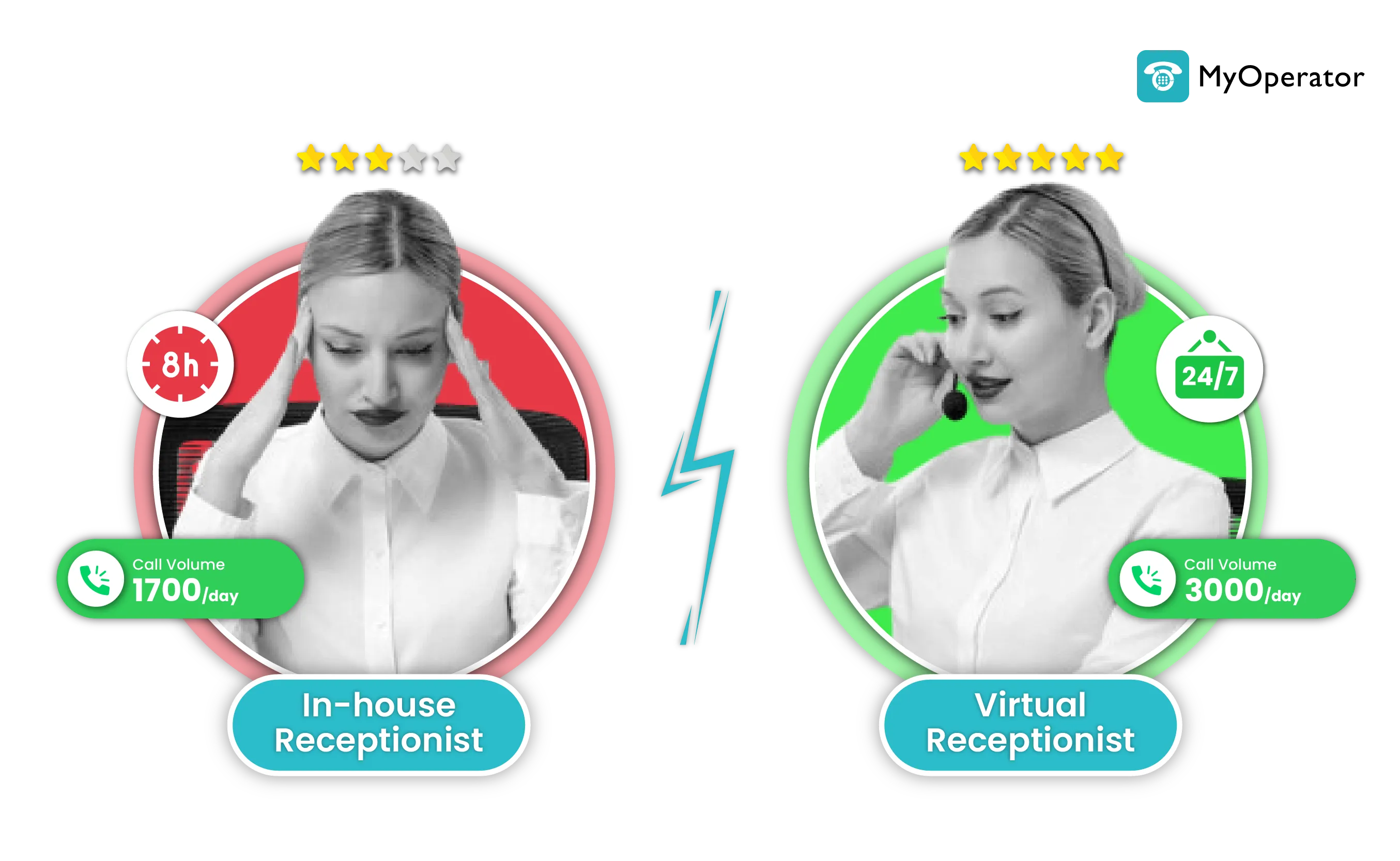


They say, “You never get a second chance to make a first impression.” In business, that impression usually happens at the front desk or over the phone. But in 2026, the "front desk" looks different for everyone.
A human receptionist is an employee responsible for taking care of the office's administrative support. They are directly hired by the organization, trained, and counted as an employee. Whereas a virtual receptionist is a cloud-based solution that is always available to attend to inbound calls. The virtual receptionist provides a range of services such as answering calls, taking messages, legal intake, mail forwarding, and appointment scheduling.
But which one is ideal for your business? Read on to know some characteristics of virtual and in-house receptionists.
Cost
Virtual Receptionist
The only cost associated with a virtual receptionist is the service fee paid directly to the service provider or agency. A virtual receptionist provides high-quality services from a remote cloud call center, so there is no overtime, no overhead, and the best part is that you don’t have to pay extra for after-hours or holiday season calls.
In-house Receptionist
The cost associated here is the average salary of a full-time receptionist, somewhere around a few lakhs, without including benefits like bonuses, insurance, and miscellaneous costs. Plus, getting an actual receptionist means you have to pay for training, office space, and materials for the job which is not the case with a virtual receptionist.

Downtime
Virtual Receptionist
Day or night, during work hours or after work hours, holiday or not, and during peak call periods, your virtual receptionist is always available, so that you don’t miss any potential inbound calls. Having a virtual receptionist for your business means you are prepared for uncertainties, emergencies, and any unforeseen circumstances.
In-house Receptionist
An in-house receptionist can’t be available 24/7 to take calls. Several factors can keep the receptionist from answering the call like a lunch break or a meeting. You will also provide vacation, sick leaves, and personal time to the receptionist, leading to hiring a temporary replacement or missing some potential lead during this time.
Productivity
Virtual Receptionist
Imagine you call a toll free customer care number and it is continuously busy, even after calling them again after an hour. Sounds exasperating right? To avoid long wait times for customers and ensure the line is never busy, use an IVR system as your virtual receptionist. Customers no longer have to wait to connect with a human receptionist and their details are captured instantly.
In-house Receptionist
A receptionist is the first person your clients come in contact with when they interact with your brand. Customers need 100% attention and quick assistance, but a single employee may not always be able to offer personal attention. They also cannot handle large call volumes at the same time, which leads to frustrated customers in queues.
After hours follow-up
Virtual Receptionist
Having an automated receptionist is the best way to ensure after-hours call coverage and follow-ups. A virtual receptionist is available 24/7 making it easier to manage those 2:00 AM customer inquiries or seasonal surges.
In-house Receptionist
You can have the best receptionist in the business, but they can only be available only for specific hours a day. Unlike a virtual receptionist, even shifts of humans cannot be there all the time, especially if there’s a natural calamity, a strike, or any unforeseen closure of the office.
Considering the above points, you can decide which one is best for your business i.e. an in-house receptionist or a virtual receptionist. The fact that you have a human receptionist shouldn’t keep you from hiring a virtual receptionist as it takes over after-hours and steps in when your in-house receptionist is unavailable.
After all, the calls must be answered!
.avif)



.webp)


