


MyOperator x WTF
How Can Fitness Platforms Boost Conversions With WhatsApp Automation?
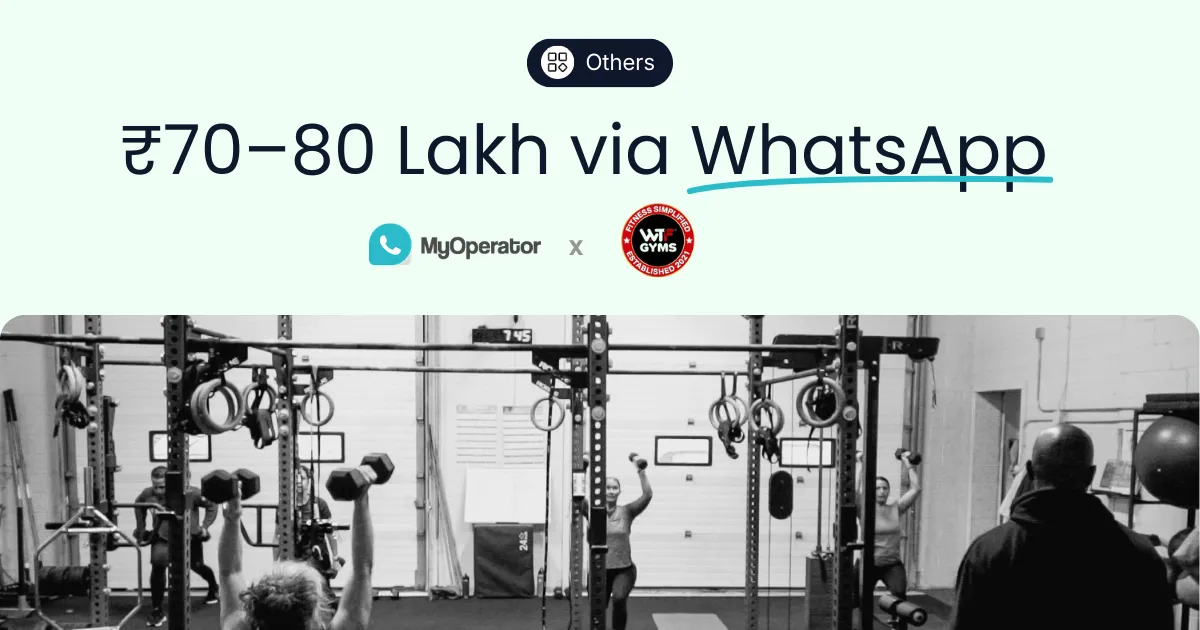

In the fitness industry, timing is everything.
Potential members often explore multiple options before committing. If communication is slow, generic, or fragmented, interest fades quickly. For fast-growing fitness platforms, converting intent into action requires immediacy, relevance, and personal connection.
This case study shows how WhatsApp automation helped accelerate conversions, strengthen engagement, and deliver measurable business impact within weeks.
Before vs After: From Fragmented Marketing to Conversational Conversions
The Fitness Marketing Reality: When Engagement Isn’t Instant, Conversions Drop
Fitness brands operate in a highly competitive, choice-driven environment. Yet many still rely on disconnected marketing channels that fail to engage users effectively.
Common challenges include:
- One-way marketing with limited interaction
- Delayed responses to high-intent inquiries
- Lack of personalised communication
- No unified omnichannel engagement strategy
Without real-time, conversational touchpoints, even strong demand fails to convert.
The Challenge
Before adopting WhatsApp automation, WTF faced several growth barriers:
- Unoptimised communication and marketing efforts
- Difficulty engaging and converting potential members
- Absence of a structured omnichannel strategy
- Limited ability to guide users through gym discovery and booking
The business needed a direct, scalable channel to engage users instantly and move them toward conversion.
What Changed
WTF partnered with MyOperator and implemented WhatsApp Business API as a core engagement and conversion channel.
The solution enabled:
Click-to-WhatsApp Campaigns:
High-intent users from Instagram Reels were routed directly into WhatsApp conversations.
Customised Booking Flows:
Automated chat journeys guided users through gym selection, locations, and membership plans.
Personalized Engagement:
Founder-recorded video messages were embedded into chats to build trust and emotional connection.
Omnichannel Marketing Integration:
WhatsApp was combined with IVR for direct, two-way customer engagement.
All interactions were managed through a structured, automated workflow.
The Outcomes
The WhatsApp-led strategy delivered rapid, measurable impact:
- Achieved 23% higher conversions within just two weeks
- Generated INR 70–80 lakh in business value through WhatsApp
- Improved customer engagement and brand recall
- Established WhatsApp as a primary communication channel
The platform transformed interest into action with speed and consistency.
Customer Speaks
“MyOperator’s action-oriented WhatsApp API platform allowed us to engage effectively, enhancing our overall communication strategy. The combination of personalised messages and founder-recorded videos proved to be a game-changer for us.”
— Vishal Nigam, Founder, WTF
What’s Next
Building on this success, the platform plans to integrate voice-based marketing using broadcast calling to further personalise outreach and deepen engagement.
Closing Thought
In fitness, motivation is momentary, but action must be immediate.
By meeting users where they already are and guiding them through personalised conversations, WhatsApp automation turns fleeting interest into lasting commitment. For fitness platforms looking to scale conversions quickly, conversational engagement is no longer optional, it’s essential.
Explore more success stories
.webp)
.webp)

.avif)



.webp)


